

The Challenge of Managing Antique Inquiries
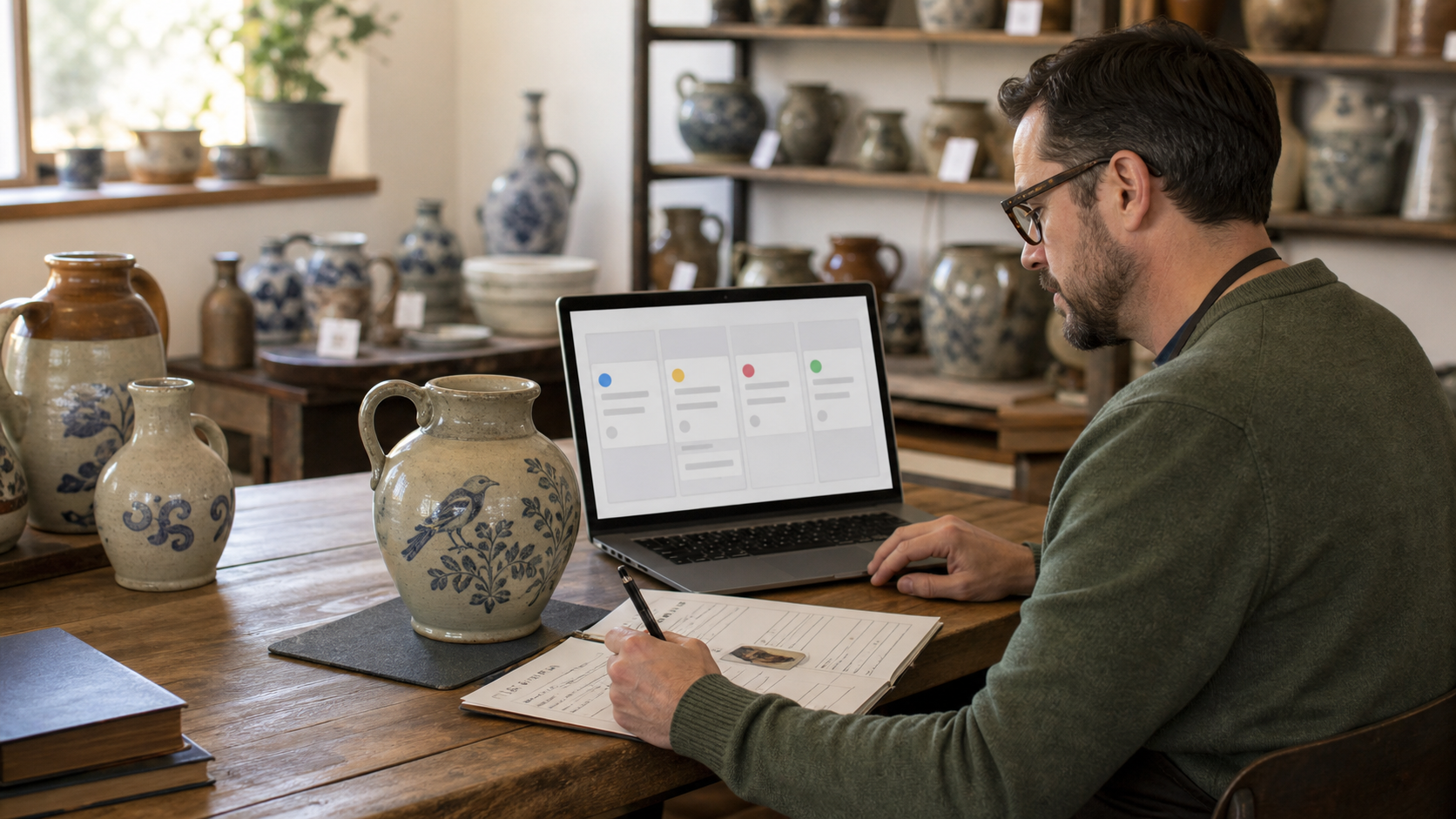
Running a successful antique ceramics and stoneware business involves much more than curating inventory and making sales. For many dealers and collector-facing shops, a demanding daily challenge is managing the sheer volume of customer inquiries. Every single day brings a new wave of emails and direct messages containing photo submissions, condition questions, provenance notes, and persistent appraisal requests. Without a structured approach to inquiry triage, these incoming communications can quickly overwhelm your daily operations and lead to administrative fatigue. Establishing a consistent system for reviewing inquiries ensures that no critical details are missed, sets clear next steps for the customer, and protects the professional energy necessary to sustain your business.
Establishing Clear Communication Boundaries
Setting realistic expectations is the first step in effective inquiry triage. Customers often submit inquiries assuming that an antique dealer is available around the clock to provide instant valuations, historical background, or authentication. By clearly defining what you can and cannot do before a customer even submits an inquiry, you significantly reduce frustration. Your website’s contact page should explicitly state that initial photo reviews are strictly preliminary. Managing these boundaries requires a solid understanding of digital habits. For those looking to understand how to handle sensitive customer data, reviewing practical guidelines for website chat privacy for antique dealers is highly beneficial.
The Essential Inquiry Triage Workflow
To process incoming requests efficiently, you should implement a standardized triage workflow. This step-by-step process helps you categorize incoming messages and route them immediately to the appropriate response template or follow-up action. Whether you are dealing with a simple domestic shipping question or a complex appraisal request, applying a structured approach is vital for maintaining order and consistency in your daily communications. A typical triage workflow should follow a repeatable sequence. Sticking to this process for every message, without exception, is the key to mastering your overflowing inbox. It transforms a chaotic inbox into an organized, manageable task list.
- Initial Categorization: Determine the primary purpose of the message. Is the customer trying to sell an item, requesting an appraisal, asking a condition question, or inquiring about shipping logistics?
- Information Verification: Check if the customer has provided all necessary details. Do you have clear photos of the front, back, base, and any maker’s marks? Note what is missing.
- Initial Assessment: Briefly review the images to determine if the item falls within your expertise.
- Response Generation: Select and customize the appropriate response template based on your categorization.
- Next Step Assignment: Clearly outline the next step for the customer, giving them a clear path forward.
For businesses utilizing digital tools and automation to help route these initial messages, referencing a chatbot dashboard workflow guide can be incredibly beneficial. It allows a dealer to easily classify inquiries before replying, saving significant administrative time that can be better spent on acquisition. Note that Messenger Bot is just one of many available organizational tools that dealers can explore.
Reviewing Customer Photos and Condition Notes
When customers submit items for potential sale or appraisal, the quality of their digital photos and written descriptions varies wildly. A crucial part of your triage process involves training your eye to glean as much information as possible from the initial submission. You must look for subtle signs of wear, crazing in the glaze, or hidden restoration work. It is particularly important to be adept at identifying repairs on antique stoneware. Professional restorations can drastically impact the commercial desirability of a piece. To streamline the review process, proactively inform customers about the exact types of photos you require for an initial assessment. A comprehensive photo submission should ideally include several key elements.
- A clear, well-lit shot of the entire item taken straight on.
- Close-up, highly focused images of the base, explicitly capturing any impressed marks or painted signatures.
- Detailed shots of the handles, the pouring spout, or the upper rim.
- Specific macro-lens photos of any known damage, chips, cracks, or areas of suspected restoration.
- An object of known, standard size included in at least one photo for scale.
Handling Appraisal Requests Professionally
Appraisal requests are frequently the most time-consuming inquiries an antique dealer receives. Providing accurate valuations is a specialized skill that requires significant time, extensive market research, and deep historical expertise. Your triage system must address appraisal requests firmly and professionally. You must clearly differentiate between a casual, informal request for an estimated retail value and a formal request for a written appraisal report meant for insurance coverage or estate distribution. You should always exercise caution regarding “sight unseen” appraisals based entirely on digital photos. Digital images can easily hide subtle professional repairs or completely misrepresent the true color, texture, and weight of historical ceramics. The tactile experience of handling a piece is widely considered indispensable for accurate valuation in the professional trade. Always include a robust disclaimer stating clearly that any preliminary thoughts are strictly preliminary.
Comparing Inquiry Types: A Triage Checklist
To help visualize how different inquiries should be categorized, this checklist table compares common operational scenarios and the appropriate triage response required from the dealer.
| Inquiry Type | Required Information | Initial Dealer Action | Standard Next Step |
|---|---|---|---|
| Purchase Inquiry | Item SKU or URL, detailed shipping destination. | Verify physical item availability in the gallery. | Provide purchase instructions or a direct invoice link. |
| Item for Sale | Clear photos covering all angles, asking price. | Assess if the item fits your inventory profile. | Make a firm counter-offer, or politely decline. |
| Formal Appraisal Request | Purpose of appraisal, basic item description. | Provide a clear fee structure and terms of service. | Schedule an intake appointment for the client. |
| Casual Valuation Request | A few images of the item, little context. | Determine your business approach to casual valuations. | Send a polite template declining free valuations. |
| History Question | Specific historical question regarding the maker or region. | Assess if answering requires extensive research time. | Provide a brief answer, or explain operational constraints. |
Streamlining Operations with Response Templates
One of the most effective tools in your triage arsenal is a comprehensive library of pre-written response templates. Instead of typing the exact same answers to the exact same questions, quickly select and customize a template to address the specific nuances of the inquiry. Your template library should cover the vast majority of your daily interactions, ensuring your business communication remains highly consistent, uniformly professional, and exceptionally efficient during busy seasons.
Managing Shipping and Logistics Inquiries
Shipping antique ceramics and stoneware is an inherently delicate process. Historical pieces are fragile, heavy, and valuable, requiring specialized packing materials and careful handling by professional couriers. Shipping inquiries make up a massive portion of a working dealer’s communications. You can effectively triage shipping questions by ensuring your primary website clearly outlines your overarching shipping policies. Be completely transparent about your preferred shipping carriers, your standard handling times from purchase to dispatch, and how you generally handle transit protection. When a specific question inevitably arises, address it promptly to alleviate customer anxiety.
Empathy and Sensible Data Habits
While efficiency is essential for running a profitable business, it is equally important to maintain a strong sense of empathy in your daily communications. Customers reaching out to you about family heirlooms or sentimental attic discoveries often have a strong emotional attachment to the items, even if those specific items hold very little commercial value. When declining to purchase an item that a family cherishes, you must always use a polite, respectful tone. Additionally, as you actively process inquiries, you constantly collect digital photos, personal contact information, and sometimes payment details. By taking receipt of this data, it is good business practice to safeguard it against unnecessary exposure. Avoid requesting sensitive payment information via standard email. Instead, direct your customers to reliable payment gateways or send standard invoice links once a transaction is formally agreed upon.
Refining Your Triage System Over Time
No inquiry triage system is perfect from the very start. As your antique business evolves, you must be willing to adapt and modify your internal processes. Regularly review your most common inquiries to critically identify areas where your current triage workflow could be more efficient. A short weekly review can reveal repeated questions, missing photo requests, and response templates that need clearer wording before the next busy period begins. Mastering the nuanced art of antique dealer inquiry triage is a fundamentally transformative step for any professional business dealing in historical ceramics. By establishing clear operational boundaries, implementing a structured daily workflow, and utilizing time-saving tools, you can successfully reclaim your valuable time. This organized approach allows you to refocus your daily efforts on what truly matters: researching fascinating history, curating exceptional antique pieces, and providing highly informed service to your clients.
Frequently Asked Questions
How should an antique dealer handle blurry photo submissions?
Dealers should use a polite, pre-written response template requesting specific, higher-resolution images before proceeding with any evaluation. The template should clearly outline the necessary angles, such as the base and maker’s marks, explaining that these details help provide an accurate preliminary assessment.
Can an antique dealer authenticate a piece of stoneware from photos alone?
Generally, no. While high-quality photos can provide a preliminary idea of an item’s age and style, definitive authentication usually requires a hands-on physical inspection. A physical examination helps assess the actual weight, the specific texture of the clay, and any potential hidden repairs.
What is the best way to decline a free appraisal request?
The best approach is to use a professional, empathetic response template that thanks the customer for their inquiry but clearly states your business policy against offering free valuations. You can then direct them to your paid appraisal services or politely suggest they consult general online resources.
Why is a formal triage checklist important for an antique dealer?
A formal triage checklist ensures consistent and efficient handling of incoming messages. It helps the dealer quickly categorize the nature of the inquiry, verify that all required information is present, and assign the appropriate next step, thereby preventing administrative delays.
How can a dealer protect customer privacy during the inquiry process?
Dealers should adopt practical data habits by securely storing submitted photos and private contact details. They should avoid taking sensitive payment information over unsecured channels like email, utilizing standard reliable invoicing systems once a transaction is finalized.


0 Comments